Stream-of-Consciousness Journaling: How to Clear Your Mind Before Breakfast
Six-forty in the morning. The kettle is on, the kitchen is still dim, and your head is already crowded — a half-drafted email, the appointment you keep forgetting to book, a sentence someone said three days ago that you are still quietly arguing with. You open a notebook and, instead of writing anything useful, you write all of it down. Badly. Fast. Without stopping.
That is the entire practice. Stream-of-consciousness journaling is not a productivity system or a gratitude ritual with nicer handwriting. It is a bucket you tip your head into before breakfast, so that the first thing you do with the day is not react to whatever happened to be floating on top of your attention at 6:40.
What It Is, Plainly
You write continuously for a set number of minutes, in full sentences or fragments or something in between, without editing, correcting, organising or judging. If you write "I don't know what to write" twelve times, that counts. If you start a sentence about your sister and end it about the price of coffee, nobody minds, least of all the page.
The point is not the text. The text is a by-product, like the sawdust under a workbench. What you are after is the small mechanical effect of moving thoughts from the loud interior to a quiet exterior, where they take up less room.
How it differs from other morning pages
Most journaling asks something of you: a reflection, a list of three good things, a plan. Those forms are useful, but they invite you to compose — to pick the flattering version, to tidy the sentence. Stream-of-consciousness refuses composition. It is the one page in your day where being articulate is not the job. That is also why it works so well first thing, when your editing brain has not fully woken up.
The Only Four Rules
Keep them loose and keep them few. These four are enough:
- Keep the hand moving. No pausing to find the right word. If the right word is missing, write the wrong one and continue.
- No crossing out. Not one line. A mess is evidence that you did it properly.
- Do not reread while you write. Reading turns writing into editing, and editing turns a six-minute practice into a forty-minute one.
- Stop on time, not on a good sentence. Chasing a neat ending is how a morning session quietly becomes a project.
Pen and paper do this better than a screen, mainly because you cannot delete with a pen. If you prefer typing, fine — but close the tabs, turn off the spelling squiggles, and resist the scroll back.
When It Earns Its Place — and When It Doesn't
Stream-of-consciousness writing is at its best when your mind feels like a room with too many people talking. Some mornings that is obvious: you woke at four with a worry, or you have a conversation ahead of you that you are dreading, or you slept badly and everything feels scratchy.
It also suits the mornings when nothing seems wrong and you cannot settle. That low-grade static — the sense of being busy before you have done anything — usually has content behind it, and the content surfaces around minute three or four, once the obvious complaints are out of the way.
It is less useful when you genuinely need to plan. A to-do list, a schedule, a decision with three options wants structure, not spill. And if you have six minutes before leaving the house, do not open anything you cannot close on time; a session you have to abandon mid-sentence leaves more residue than it clears. Give it ten to fifteen minutes on days when you have them, and skip it on the days you don't.
One sensible caveat: if a morning session keeps turning up the same heavy material — grief, persistent dread, a situation that is not shifting — that is worth talking through with someone qualified rather than working through alone in a notebook. Writing is a good container, not a treatment.
A Ten-Minute Session, Start to Finish
- Set the timer before you sit down. Ten minutes is plenty. Six is a real session. Phone face down, notifications off.
- Write the date and the first true thing. "I'm tired and I don't want to do this" is fine. So is "The neighbour's dog is barking again."
- Follow whatever pulls. If the sentence about the dog turns into a memory of your grandfather's garden, go there. No detour is a wrong turn.
- When you stall, describe the stall. Write about the blankness, the itch in your hand, the fact that this is faintly ridiculous. Stalling is content.
- Stop when the timer goes. Mid-sentence is ideal. It signals to yourself that the page did not win.
Closing the Session So You Can Leave It
This is the part most people skip, and the part that decides whether the practice helps or merely gives you somewhere to worry. An open session follows you into the kitchen, into the shower, into the first meeting. Closing it takes thirty seconds and is worth doing every single time.
Mark the break
Draw a line. Write the time. Something small and physical that says the writing portion of the morning is over. If you use a loose-leaf page, close the notebook or turn the page over — do not leave the last sentence staring up at you from the desk.
Take one thing with you
Reread briefly, once, and find at most one item that needs action: book the appointment, send the awkward message, apologise. Write it on a separate slip or in your task list. Everything else stays on the page. This is the difference between venting and clearing: one thing out, the rest acknowledged and parked.
Do one physical transition
Stand up. Fill the kettle. Open a window. Ten slow breaths. The body needs a small signal that the sitting-and-thinking is finished, and a physical cue works better than a mental instruction. Many people pair the end of the session with the first coffee, which is as good a ritual as any.
Do not audit the page
Resist the urge to grade the writing, to count how often a name appeared, or to decide what it all means about you. Save a proper reread for the end of the month, if you want one at all. Analysing every session turns a clearing practice into an examination you have to sit each morning.
When It Goes Sideways
The page stays blank. Lower the bar further: describe the room in front of you for two minutes, then start again. Momentum usually arrives disguised as something boring.
It becomes a to-do list. Let it. Write the list out, then draw a line and keep going for three more minutes. The tasks are often the surface; the session is for what is underneath them.
It turns into complaining about the same three people. Name the pattern in the margin and write about the pattern instead. "I keep writing about this because…" will take you somewhere new.
Your hand hurts before your mind empties. Ten minutes is genuinely enough. This is not an endurance event, and a shorter session you repeat is worth more than a long one you dread.
Keep It Short, Keep It Loose
The habit survives on being small. A page, a pen, ten minutes, a timer, one thing carried into the day and the rest left behind. Do that three or four mornings a week and you will notice the difference in how the day starts — less argument with yourself before the first email, fewer thoughts circling in the shower.
Some mornings it will feel like nothing happened. That is normal, and it is not a failure; the clearing is quiet by design. Sit down tomorrow, write the date, and start with the first true thing. Your breakfast will still be there when you finish.
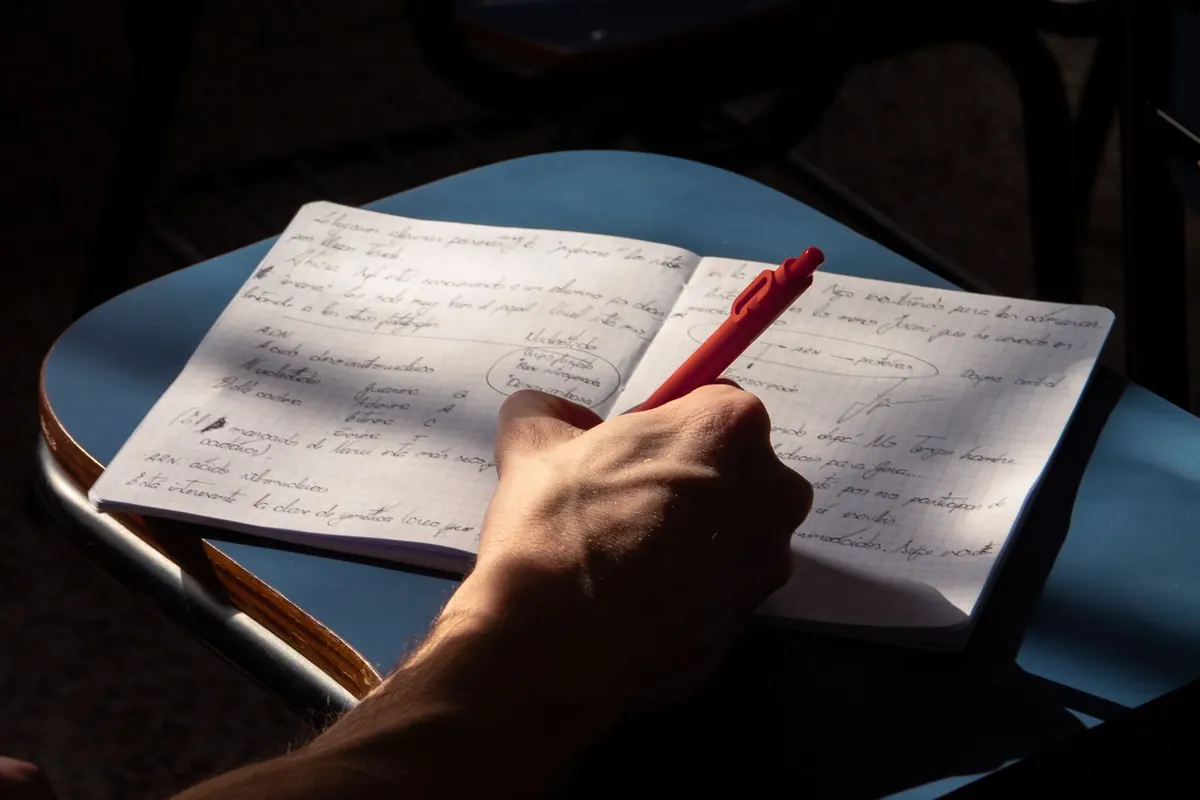
Photo: jessica olivella / Pexels

Rainy Morning Journaling: A Cozy Routine for Slower Days
A weather-based morning routine that uses rain, tea, and quiet to slow your journaling down—with setup...

Brain Dump vs. Reflective Journaling: What to Write When Your Mind Is Full
A brain dump clears your head; reflective journaling helps you understand it. Here's how to tell which one...
About Us